

I have been walking Caminos in Spain since 2014. In the Netherlands, I have been walking the Four Days Marches and other hikes for years. I really enjoy it; you get to see new things, and walking often takes you to lovely places you wouldn't normally reach by bike or car.
Almost every year, I walk a Camino in Spain. The country offers excellent facilities for this: there is plenty of accommodation for walkers, the routes are generally well signposted, and the costs for food and lodging are very low. Albergues—the Spanish term for inns or hostels—are an excellent place to stay; they cater primarily to walkers, pilgrims, and cyclists. You usually sleep in a shared dormitory with bunk beds and use communal showers and toilets, and there is often a kitchen available. There are three types of albergues: municipal ones, which are cheap and basic; parish-run ones, managed by a church and often operating on a donation basis; and private ones, which offer more comfort, smaller dormitories, and sometimes even private rooms. You cannot reserve a bed at municipal albergues, whereas reservations are possible at the other two types. Accommodation prices at municipal albergues are often lower than at commercial ones.
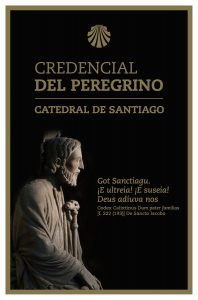
To stay in these overnight accommodations (albergues), you need a credencial. This is a pilgrim passport—the official form of identification on the Camino in Spain—in which you collect daily stamps. You gather stamps from churches, cafés, town halls, hostels, and the like; these serve as proof that you have walked the Camino and are also required to obtain the Compostela (pilgrimage certificate). You can obtain this credencial from various pilgrim organizations, such as the Dutch St. James Society (Nederlands Genootschap van Sint Jacob), or from places like Casa Ivar in Santiago de Compostela.
There is a wealth of information online about the Caminos in Spain, and they are very safe to walk solo. You almost never hear reports of incidents involving pilgrims or hikers on the Camino. You can also find plenty of information online about walking a Camino; for instance, take a look at one of the following websites.
Website Dutch Pilgrim Association
Belgium Pilgrim Association
Gronze
Eroski website
Casa Ivar and his forum Camino de Santiago Forum
On this blog, I aim to describe the walks I undertake in Spain (and Portugal). These won't be highly detailed accounts; instead, they will offer a general idea of the route and the conditions encountered during the walks I am doing or have completed. You will find additional links in the right-hand menu, including an item pointing to a list—albeit an incomplete one—of well-known and lesser-known Caminos, intended to give you an impression of just how many there are.